


-1920w.jpg)
-1920w.jpg)
-1920w.jpg)
-1920w.jpg)
-1920w.jpg)
Professor Martin Welp
Eberswalde University of Sustainable Development
Publications
Hofman, I., & Spies, M. (2026). Introduction to the symposium 'Beyond paradigms: Eclectic pathways of agrarian change'. Agriculture and Human Values, 43(2), Article 103.
https://doi.org/10.1007/s10460-026-10894-6
Raab, C., Nguyen, V. D., Barrett, B., Zakirova, A., Zuberi, M., Alff, H., & Spies, M. (2026). Crop type classification in smallholder agriculture of Central and South Asia using Sentinel-1/2 data fusion. Remote Sensing Applications: Society and Environment, 42, 102007.
https://doi.org/10.1016/j.rsase.2026.102007
Spies, M., & Hofman, I. (2026). Pragmatic progress? Trade-offs and seed choices in Tajikistan. Agriculture and Human Values, 43(2), Article 67.
https://doi.org/10.1007/s10460-026-10855-z
Zuberi, M., Spies, M., & Nielsen, J. Ø. (2026). The making and unmaking of the Bacillus thuringiensis cotton assemblage in South Punjab, Pakistan. Geoforum, 171, 104578.
https://doi.org/10.1016/j.geoforum.2026.104578
Alff, H., & Borissova, Y. (2025). On the frontline towards resource independence: Agronomical knowledge and farming experiments with the fibre plant kendyr' in Soviet Central Asia. Central Asian Survey, 1–19.
https://doi.org/10.1080/02634937.2025.2574491
Spies, M. (2025). Local seed systems and Global China: The spread of Chinese hybrid seeds in Pakistan and Tajikistan. The Journal of Peasant Studies, 1–28.
https://doi.org/10.1080/03066150.2025.2462762
Spies, M., Alff, H., Zakirova, A., & Zuberi, M. (2025). Cultivating knowledge for farming futures: Insights from participatory stakeholder workshops in Central and South Asia. The Journal of Agricultural Education and Extension, 1–26.
https://doi.org/10.1080/1389224X.2025.2573495
Spies, M., Zakirova, A., Zuberi, M., Schick, A., & Alff, H. (2025). Participatory Strategy Development for Sustainable Biomass Production (PARSCO): A practical guide using the MARISCO toolbox. Hochschule für nachhaltige Entwicklung Eberswalde.
https://doi.org/10.57741/OPUS4-992
Zakirova, A., Alff, H., & Schmidt, M. (2025). Unequal fields: Political ecology perspective on organic cotton production in Tajikistan. Organic Agriculture.
https://doi.org/10.1007/s13165-025-00491-y
Zuberi, M., Spies, M., & Østergaard Nielsen, J. (2025). Constrained spatial imaginaries of smallholder farmers: Perspectives from South Punjab, Pakistan. Journal of Integrative Environmental Sciences, 22(1), 2536263.
https://doi.org/10.1080/1943815X.2025.2536263
Spies, M. (2024). Agriculture and Chinese agribusiness investments in the context of the China-Pakistan Economic Corridor. In P. Abb, F. Boni, & H. H. Karrar (Eds.), China, Pakistan and the Belt and Road Initiative: The experience of an early adopter state (pp. 33–51). Routledge.
https://doi.org/10.4324/9781032633411-3
Spies, M., Alff, H., Raab, C., Zakirova, A., & Zuberi, M. (Eds.). (2024). Sustainable food and biomass futures? Localised approaches to agricultural change and bioeconomy.
https://doi.org/10.57741/OPUS4-837
Zuberi, M., Spies, M., & Nielsen, J. Ø. (2024). Is there a future for smallholder farmers in bioeconomy? The case of 'improved' seeds in South Punjab, Pakistan. Forest Policy and Economics, 158, 103100.
https://doi.org/10.1016/j.forpol.2023.103100
Alff, H. (2023). Maize-farming forever? Path dependency and friction in south-east Kazakhstan's 'post-Soviet' borderland agriculture. Central Asian Affairs, 10(3), 270–292.
https://doi.org/10.30965/22142290-bja10040
Alff, H., Konysbayev, T., & Salmyrzauly, R. (2023). Old stereotypes and new openness: Discourses and practices of trans-border re- and disconnection in south-eastern Kazakhstan's agricultural sector. Eurasian Geography and Economics, 64(7–8), 896–918.
https://doi.org/10.1080/15387216.2023.2169184
Alff, H., & Spies, M. (2023). Coexistence or competition for resources? Transboundary transformations of natural resource use in China's neighborhood. Eurasian Geography and Economics, 64(7–8), 797–810.
https://doi.org/10.1080/15387216.2023.2258150
Raab, C., & Spies, M. (2023). Characterising cropland fragmentation in post-Soviet Central Asia, using Landsat remote-sensing time series data. Applied Geography, 156, 102968.
https://doi.org/10.1016/j.apgeog.2023.102968
Spies, M. (2023). Promises and perils of the China-Pakistan Economic Corridor: Agriculture and export prospects in northern Pakistan. Eurasian Geography and Economics, 64(7–8), 869–895.
https://doi.org/10.1080/15387216.2021.2016456
Spies, M., Alff, H., Missall, S., & Welp, M. (2023). Path dependencies of (un-)sustainable land use in Central Asia. Central Asian Affairs, 10, 239–269.
https://doi.org/10.30965/22142290-bja10039
Zakirova, A., Alff, H., & Schmidt, M. (2023a). Cash crop or food crop? Socioeconomic and geopolitical factors affecting smallholder farmer crop selection in times of crisis in south-western Tajikistan. Frontiers in Agronomy, 5, 1228165.
https://doi.org/10.3389/fagro.2023.1228165
Zakirova, A., Alff, H., & Schmidt, M. (2023b). Is the new path a modified old path? Smallholder farmers' perspectives on cotton farming in Khatlon, Tajikistan. Central Asian Affairs, 10(3), 213–238.
https://doi.org/10.30965/22142290-bja10038
Alff, H. (2022). Post-Soviet decline or China-induced prosperity? Agricultural and socio-economic change in the Kazakhstan-China borderlands. In S. von Löwis & B. Eschment (Eds.), Post-Soviet borders (pp. 206–220). Routledge.
Spies, M. (2022). Der Chinesisch-Pakistanische Wirtschaftskorridor: Versprechen und Widersprüche für den Agrarsektor Pakistans. Geographische Rundschau, 75(4), 16–19.
Spies, M., Zuberi, M., Mählis, M., Zakirova, A., Alff, H., & Raab, C. (2022). Towards a participatory systems approach to managing complex bioeconomy interventions in the agrarian sector. Sustainable Production and Consumption, 31, 557–568.
https://doi.org/10.1016/j.spc.2022.03.020
Zuberi, M., Raab, C., & Spies, M. (2022). Landnutzungswandel im Baumwollgürtel Pakistans: Gen-Baumwolle, Agrardiversifizierung und ökologische Herausforderungen im Süden des Punjab. Geographische Rundschau, 75(4), 20–25.
Alff, H., Schmidt, M., Spies, M., & Steenberg, R. (2021). Layered legacies – An introduction. In M. Schmidt, R. Steenberg, M. Spies, & H. Alff (Eds.), Beyond post-Soviet: Layered legacies and transformations in Central Asia (Vol. 33, pp. 4–6). Universität Augsburg.
Spies, M., Schick, A., Karomatov, S., Bakokhoja, B., Zikriyokhon, K., Jobirov, S., Bloch, R., & Ibisch, P. L. (2021). Adapting a participatory and ecosystem-based assessment impacted by the pandemic: Lessons learned with farmers in Tajikistan. Frontiers in Sustainable Food Systems, 5, 750252.
https://doi.org/10.3389/fsufs.2021.750252
Spies, M., & Welp, M. (2021). Stakeholder-based knowledge mapping for re-establishing agroforestry systems in Central Asia. In M. Schmidt, R. Steenberg, M. Spies, & H. Alff (Eds.), Beyond post-Soviet: Layered legacies and transformations in Central Asia (Vol. 33, pp. 38–48). Universität Augsburg.
Zuberi, M. (2021). Between disconnects and flows: Reflections on doing fieldwork in rural South Punjab during the Covid-19 pandemic. Südasien-Chronik – South Asia Chronicle, 11/2021, 521–540.
Alff, H., & Spies, M. (2020). Pfadabhängigkeiten in der Bioökonomie überwinden? Landwirtschaftliche Intensivierungsprozesse aus sozial-ökologischer Perspektive. PERIPHERIE, 159/160(40), 334–359.
https://doi.org/10.3224/peripherie.v40i3-4.06
Ruppert, D., Welp, M., Spies, M., & Thevs, N. (2020). Farmers' perceptions of tree shelterbelts on agricultural land in rural Kyrgyzstan. Sustainability, 12(3), 1093.
https://doi.org/10.3390/su12031093
Spies, M. (2020a). Agrarwandel und sozial-ökologische Nachhaltigkeit. Wissenschaftsjahr 2020-21.
Spies, M. (2020b). Commercialization versus de-intensification? Markets, livelihoods and agricultural change in northern Pakistan. ASIEN, 156/157, 79–101.
https://doi.org/10.11588/asien.2020.156/157.15352
Spies, M., & Alff, H. (2020). Assemblages and complex adaptive systems: A conceptual crossroads for integrative research? Geography Compass, 14(10), e12534.
https://doi.org/10.1111/gec3.12534
Zuberi, M. (2020). Agriculture in flux: Insights into agricultural transformations and possible scenarios in South Punjab, Pakistan. In A. Follmann, J. Müller, & G. C. Falk (Eds.), Aktuelle Forschungsbeiträge zu Südasien, 10. Jahrestagung des AK Südasien, 24./25. Januar 2020 (pp. 31–34). Freiburg.
Selected Posters
Zuberi, M., Spies, M., Mählis, M., Alff, H., Zakirova, A., Raab, C. (2021) Participatory knowledge mapping as a basis of decision making for sustainable agrarian land use systems, poster presented at Landscape 2021 - Diversity for Sustainable and Resilient Agriculture , Berlin, 20-22 September 2021.
Raab, C and Spies, M. (2019) Object-based characterisation of agricultural land use
trajectories in Central Asia, poster presented at 9th Advanced Training Course on Land Remote Sensing: Agriculture, Université catholique de Louvain, Louvain-la-Neuve, Belgium, 16-20 September 2019.
Group leader
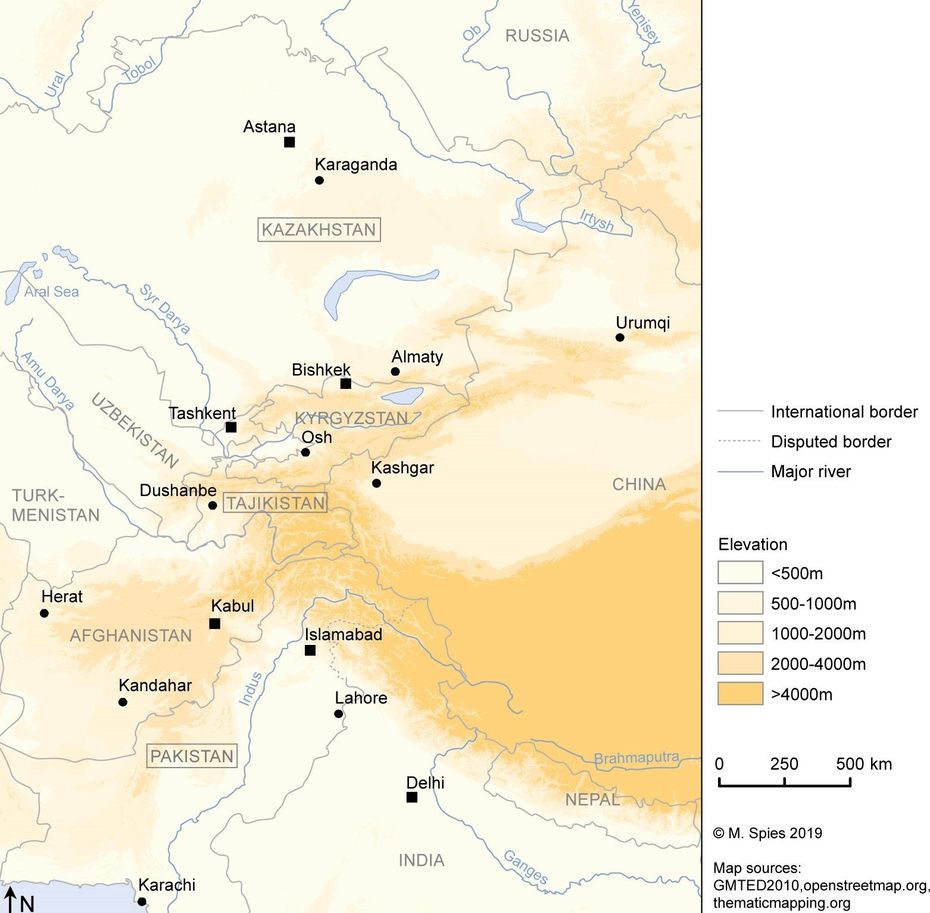
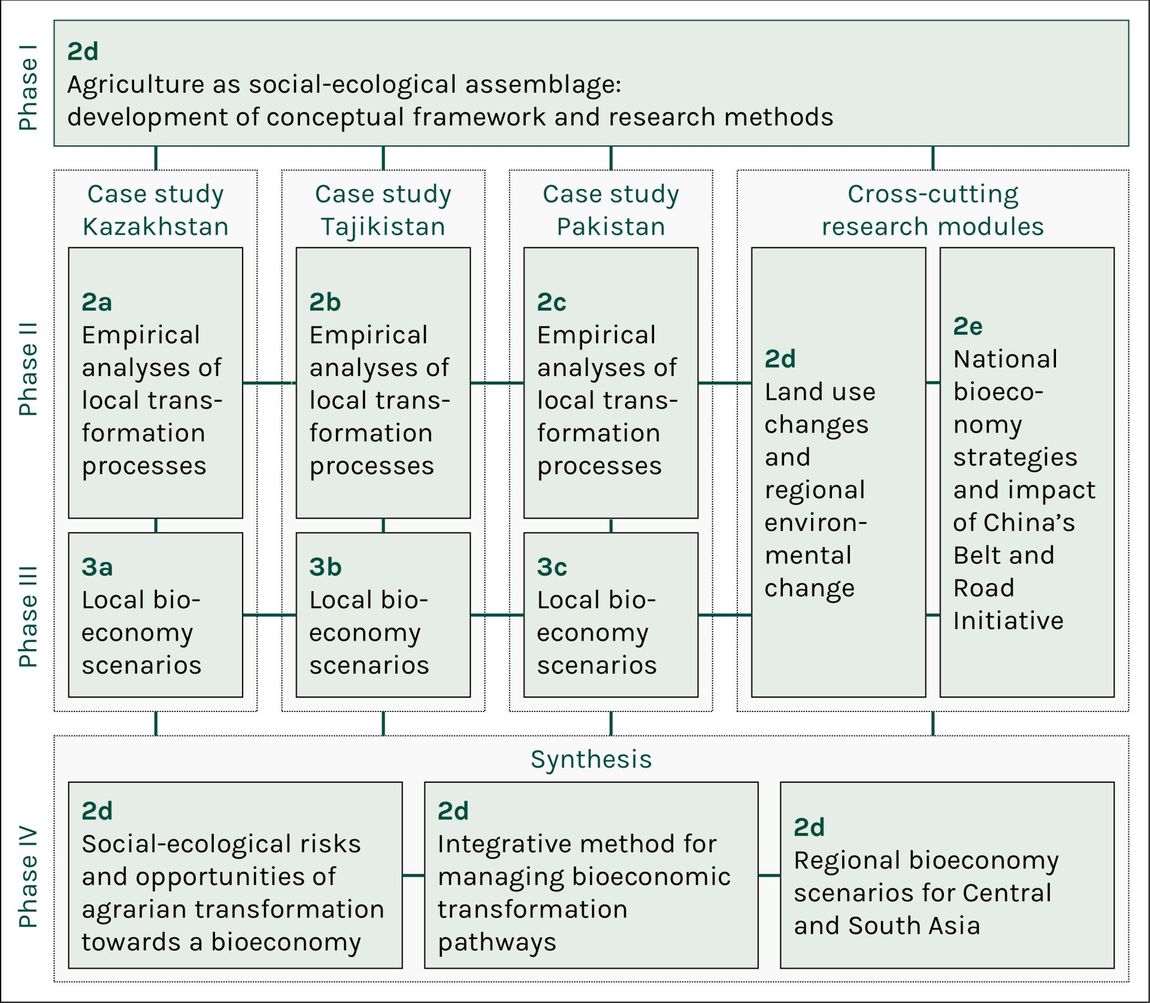
Michael is a human geographer with broad experience in transdisciplinary human-environmental research. As initiator and group leader of TRANSECT, his main research interests are reflected in the project design and include social-ecological dynamics of farming systems, participatory approaches to natural resource management, and transboundary perspectives of agrarian change in Central Asia and Pakistan.
Research interests

Senior researcher
Trained in Human Geography and Area Studies (Slavic and Central Asian Studies), Henryk draws on eighteen years of experience in development and transformation research in different regional contexts. Based on long-term fieldwork, his work in the TRANSECT project scrutinises the various political, socio-economic and ecological transitions in the agricultural sector of south-eastern Kazakhstan.
Research interests

Postdoctoral researcher
Christoph is a geographer by training with a focus on remote sensing and nature conservation. He is especially interested in the application of machine learning algorithms to understand changes in agricultural land use and grassland ecosystems.
Research interests

PhD researcher
Aksana has a grounded knowledge in major development problems in the agricultural sector in Central Asia. Her research is on agricultural transformations in rural Tajikistan, with a particular focus on cotton production. Building up on her past work experience in rural Kyrgyzstan and her knowledge of Russian, Aksana is a great asset to the research group.
Research interests

PhD researcher
Mehwish has a keen interest in sustainability transitions underpinned by social equity. Her previous research experiences encompass community based natural resource management, cross-sectoral natural resource policies, and multi-level governance with a regional focus on Europe and South Asia. As part of the TRANSECT project, she will conduct in-depth field research on agricultural transformations in Punjab, Pakistan.
Research interests
Project coordinator

Professor Martin Welp
Eberswalde University of Sustainable Development

Professor Pierre Ibisch
Eberswalde University for Sustainable Development
Muhammad Nawaz Shareef
University of Agriculture,
Multan, Pakistan
Professor Asif Ali
Tajik Academy of Agricultural Sciences,
National Republican Centre for Genetic Resources
Professor Karomatov Sharofiddin Sharifovich

Al-Farabi Kazakh National University,
Department of Biology and Biotechnology
Professor Sabir Nurtazin

Lanzhou University,
International Centre for Tibetan Plateau Ecosystem Management
Professor Long Ruijun

Augsburg University, Institute of Geography,
Chair of Human Geography and Transition Research
Professor Matthias Schmidt
Humboldt-Universität of Berlin,
Integrated Research Institute on
Transformations of Human-Environment
Systems (IRITHESys)
Professor Jonas Østergaard Nielsen

Dr Ralf Bloch
Eberswalde University for Sustainable Development

Dr Andrei Dörre
Freie Universität Berlin

Dr Irna Hofman
University of Oxford

Dr Ulan Kasymov
Technische Universität Dresden

Professor Hermann Kreutzmann
Freie Universität Berlin

Dr Daniel Müller
Leibniz Institute of Agricultural Development in Transition Economies

Professor Jonas Østergaard Nielsen
Humboldt-Universität zu Berlin

Professor Martin Petrick
Giessen University

Dr Fabricio Rodríguez
Friedrich Schiller University, Jena

Professor Matthias Schmidt
Augsburg University

"Bioeconomy as Societal Change"
Network of Junior Research Groups
German Federal Ministry of Education and Research
This webpage is maintained by social science oriented junior research groups, including TRANSECT, supported by the German Federal Ministry of Education and Research (BMBF) under the Program „Bioeconomy and Societal Change“. It aims at sharing research results and at informing about ongoing research activities and related events. For detailed information please also visit our individual project websites.

“Environing Infrastructure: Communities, Ecologies, and
China’s 'Green' Development in Contemporary Southeast Asia”
Rachel Carson Center for Environment and Society,
Ludwig Maximilians University Munich
Environing Infrastructure: Communities, Ecologies, and China’s “Green” Development in Contemporary Southeast Asia is a five-year research project (2020-2025) funded by the Volkswagen Foundation. It is carried out by a team of researchers based at the Rachel Carson Center for Environment and Society, LMU Munich. It focuses on the environmental components of Chinese large-scale infrastructure development in Southeast Asia.
Southeast Asia, a major target for Chinese investments, is on the brink of numerous ecological crises. There is rising awareness across the region of the potentially devastating environmental impact of Chinese infrastructure projects. On the other hand, China is a crucial economic partner and a model of development.
Environing Infrastructure studies these dynamics by engaging with local communities and Chinese planners through long-term, comparative ethnographic research. Rooted in Social Anthropology and the Environmental Humanities, it explores the nexus of infrastructure development, local ecologies, and China's "green" framing of its global ambitions.

"Roadwork: An Anthropology of Infrastructure at China's Inner Asian Borders"
University of Zurich
‘ROADWORK: An Anthropology of Infrastructure at China’s Inner Asian Borders’ is a four-year research project (2018-2022) funded by the Swiss National Science Foundation and based at the Department of Social Anthropology and Cultural Studies at the University of Zurich. The project team conducts ethnographic fieldwork along roads that have been designated as key links at the Sino-Inner Asian interface of the China-initiated Silk Road Economic Belt. Archival research and GIS analysis, two further research methods employed by the team, will help to identify social relations and temporalities that are difficult to capture through ethnography, but which nonetheless powerfully affect roads and travel in this region of Asia. The conceptual aim of the project is to propose a novel framework to theorize the social life of roads through a dialogue with the concepts of place and time, and to bring decay and maintenance to the centre of anthropological enquiry.

"China Made: Asian Infrastructures and the 'China Model' of Development"
Center for Asian Studies at the University of Colorado, Boulder
and the Hong Kong Institute for Humanities and Social Sciences
at the University of Hong Kong
Over the past decade, China has invested tremendously in infrastructure development, resulting in dramatic social and cultural changes in both rural and urban regions. It has also promoted an infrastructural development model beyond its borders as part of a newly aggressive foreign policy. China Made is a partnership between the Center for Asian Studies (CAS) at the University of Colorado, Boulder and the Hong Kong Institute for Humanities and Social Sciences at the University of Hong Kong (HKIHSS), and is supported by an Asian Responsive Grant from The Henry Luce Foundation. China Made will explore both of domestic and international dimension of China’s infrastructure development. The project is also meant to shift the academic focus from broader geopolitical and international relations perspectives to a finer grained analysis of the infrastructures themselves and the on-the-ground social and cultural dimensions of their construction. It will involve three academic conferences – two hosted by CAS and one hosted by HKIHSS – postdoctoral and graduate research positions, and the development of online scholarly resources for project participants and the broader academic community.

"ÖkoFlussPlan"
Eberswalde University of Sustainable Development
Preservation of Selected Ecosystem Services in the Floodplains of Naryn / Kyrgyzstan Through Renewable Energies and Short Rotation Plantations, Including Sustainable Land and Water Management and Capacity Building,
In the semi-arid and arid climate of Central Asia, rivers and floodplains constitute important regional biodiversity hotspots and provide relevant ecosystem services. The floodplain ecosystems along the Naryn river in Kyrgyzstan are still in a largely natural state. Over a stretch of more than 600 km, its upper and middle reaches still preserved a completely unregulated dynamic river regime fostering riparian forests of rich biodiversity. The forests provide ecosystem services important for local inhabitants, such as the provision of pasture and fuel wood, recreation areas, and erosion protection. Yet, the persistence of the forests is compromised by overgrazing and excessive fuel wood extraction. In addition to that, planned hydropower plants threaten to disrupt the natural dynamics.
The overarching goal of ÖkoFlussPlan (BMBF 2019-2022) is to preserve the floodplain forests along the Naryn River and to offer and implement sustainable solutions for the local population. The present state of biodiversity will be recorded in one project area. The current use pressure will be reduced by offering alternatives for removing wood: On the one hand, short rotation plantations will be established that can replace the wood from the forests, on the other hand modern technologies for the generation of renewable energies will be displayed as pilot facilities. The project strives for a close dialogue with the local population in order to integrate local knowledge and to communicate the project results back to the local stakeholders. Embedded in a big partner setting covering a multitude of research disciplines and implementation approaches, the activities of the Eberswalde University for Sustainable Development (HNEE) will focus on stakeholder analysis, stakeholder workshops, and capacity building.